.png)


Drought-Proofing Your North Dorset Garden This Summer
If you garden in north Dorset, drought-proofing your garden is becoming a practical necessity. The chalk downland around Blandford Forum, Cranborne Chase and the Stour valley drains fast and bakes hard in a dry summer, leaving many gardeners struggling to keep things alive. Whether your plot sits on the free-draining chalk of the higher ground around Iwerne Minster or Fontmell Magna, or on the heavier clay of the Blackmore Vale near Sturminster Newton and Child Okeford, the solutions are different — and this guide covers both...

Start with structure to drought-proof your north Dorset garden
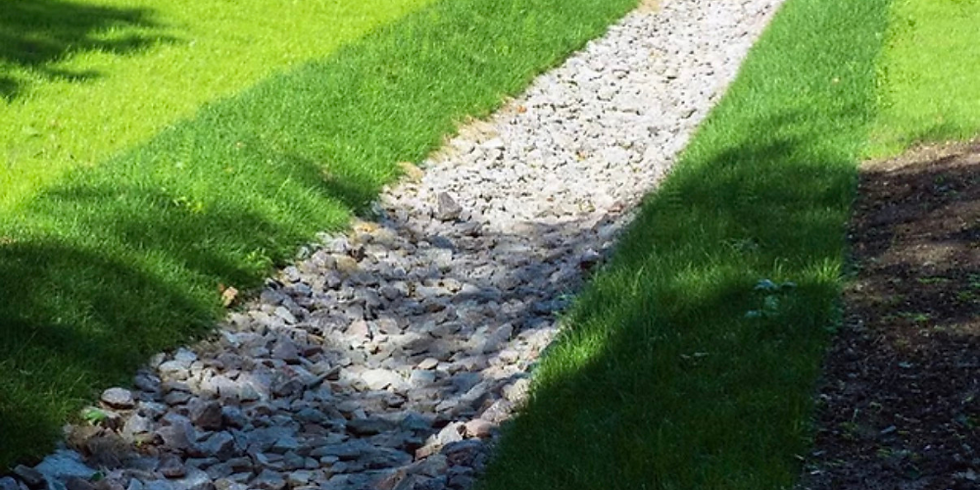
Most drought gardening advice skips straight to plant lists. The smarter approach starts with how your garden is physically laid out. Structure determines how much thirsty lawn and border you maintain in the first place. Replacing areas of struggling lawn with gravel paths and gravel garden planting is one of the most effective ways to drought-proof a north Dorset garden.
Gravel suppresses weeds, retains soil moisture better than bare earth, and suits the chalk landscape aesthetic far more naturally than a scorched lawn. It also creates warm surfaces that sun-loving plants thrive in — and that butterflies use as basking spots on summer mornings.
Decking and hard surface areas around a seating space reduce the amount of garden that needs watering and maintenance through summer. A pergola creates a sheltered microclimate that slows moisture loss from surrounding planting. Garden buildings — workshops, summer houses, garden offices — replace high-maintenance lawn or border with structure that needs no water at all. If you have been thinking about adding a building to your plot, a dry summer is a good reminder that it solves more than one problem.
Rethink your lawn for a more drought-resistant north Dorset garden
Lawns are the biggest water drain in a summer garden and the most visible casualties of a dry spell. The good news is that a browning lawn is rarely dead. Grass greens up once rain returns, and the pressure to keep watering through a dry July is largely aesthetic rather than practical. The more useful question is whether your lawn's grass mix suits Dorset conditions.
Fescue-based turf handles dry summers significantly better than the ryegrass-heavy utility turf used in most new-build gardens. If you are considering re-turfing, choosing the right mix is the single most effective step you can take for long-term drought resilience. Partial replacement of lawn with gravel, bark or managed wildflower areas also reduces maintenance and water demand, and creates a far more interesting garden through summer than a uniform expanse of struggling grass.
Choose the right hedges to drought-proof your north Dorset garden
A well-chosen hedge does far more than mark a boundary in a drought-prone garden. It reduces wind exposure across the whole plot, slowing moisture loss from soil and plants considerably. The chalk soils of the Cranborne Chase edge are alkaline, free-draining and shallow — but a wide range of native species perform extremely well in these conditions once established.
Field maple, wayfaring tree, dogwood, spindle and hawthorn are all native to the north Dorset landscape, naturally drought-tolerant, and actively support local wildlife through summer. On the heavier clay soils of the Blackmore Vale, hazel and blackthorn establish readily and require minimal intervention once through their first season. A hedge planted this autumn works hard for your garden by next summer.
Clearance — remove the water thieves from your garden
Overgrown patches of bramble, rank grass and scrubby vegetation compete aggressively for soil moisture, often at the expense of the plants you actually want. Clearing overgrown areas before the driest part of summer is a practical drought-proofing measure as much as an aesthetic one. If parts of your north Dorset garden have been taken over by self-seeded growth or encroaching vegetation from boundaries, clearing that growth gives everything else a fighting chance through July and August.
Plants that work for a drought-proof garden — by north Dorset soil type
The most useful plant advice for a drought-proof garden in north Dorset is soil-specific. Chalk and clay behave very differently from each other, and generic plant lists rarely account for this. On free-draining chalk — on the higher ground around Cranborne Chase, Sixpenny Handley and the downland villages — lavender thrives in chalky, alkaline conditions and performs best alongside a gravel garden path. Nepeta, sedum, achillea, cistus, eryngium, verbena bonariensis and salvias all do well with minimal intervention. Sedum earns a particular mention: it is fully hardy, retains its structure through winter, and is one of the best late-summer nectar sources for butterflies.
On the clay soils of the Stour and Blackmore Vale, deep-rooted plants that find their own moisture are the ones to prioritise. Rudbeckia, hemerocallis, geraniums and crocosmia all perform reliably without supplementary watering once through their first year.
Hambledons offer gravel driveways and paths, turfing, hedge planting and garden clearance across north Dorset. Whether you are in Blandford Forum, Sturminster Newton, Shaftesbury, Gillingham, Iwerne Minster or the surrounding villages, get in touch for a free summer quote.
Hambledons: Here to help:
Based in Shillingstone, Hambledons is North Dorset’s premier hedge and fencing specialist, providing expert outdoor services to residential and commercial clients across the region. Our professional craftsmanship extends from our local hubs in Blandford Forum, Sturminster Newton, and Shaftesbury to the wider areas of Gillingham, Sherborne, Dorchester, and Wimborne Minster, as well as surrounding towns like Wareham, Ferndown, and Verwood. Whether you need structural fencing or precision hedge maintenance, we pride ourselves on serving the heart of the Dorset countryside—read our latest blog posts here to discover our recent projects and seasonal advice.


Comments